Dear Readers,
In 2004, I was pregnant with my first child, and Anastasia, one of my best friends, was pregnant with her first too. One day she said, “I want to nurse your baby and you to nurse mine.” I nodded like, Hmm, I’ll let you know, but inside I was shocked by her suggestion. Was feeding another’s baby even . . . legal? Was my milk safe for any old baby? Was Anastasia a pervert? Of course, breastfeeding anything at that point in my life was a near-total abstraction to me. Other than being nursed by my own mother in my pre-memory era, I knew nothing except that you should do it for the sake of your child’s health, and no one should ever have to watch you do it. In other words, breastfeeding was both idealized (to make women feel there was one way and only one way to be a good mother) and hidden away to make sure that breasts were only public to titillate, never to nourish.
But Anastasia’s request nagged at me. I ended up asking my dad, a Midwestern doctor, whether there was a health reason that precluded cross-nursing. “None that I can think of,” he said. So, I nursed Lionel and Anastasia nursed Skuli and five years later, conveniently synced up again, I nursed her baby, Sabatino, and she nursed my little Magnus. I went from being freaked out to incredibly grateful that I had someone who could feed and calm my baby this way besides me. Honestly, I got the much better end of the deal because Anastasia produced a lot of milk—she could squirt across a room—and she also breastfed each of her kids for four years while I petered out after about six months. To wean Lionel, she would sleep over at my apartment for a night and then hand express milk into a glass for four-year-old Skuli. It was kind of awesome.
I thought of my hysteria about breastfeeding anew while reading a unique and magical new book by artist Barbara Zucker, called The World’s Second Oldest Profession: The Wet Nurse, Revered and Reviled. It’s partly a work of art history (she gathered dozens and dozens of depictions of women nursing—babies, adult men, bear cubs—and squirting milk Anastasia-style) and partly an excavation of a common-but-obscured element of women’s lives and history: the life-or-death work of feeding infants before formula was a thing. Her wet nurse obsession started in 1990, when Zucker, a second-wave feminist of some repute and renowned sculptor, encountered an essay by feminist critic and scholar Linda Nochlin (1931–2017). The piece analyzed The Wet Nurse Angèle Feeding Julie Manet, a painting by Julie’s mother, Berthe Morisot. It was common for upper-class French women like Morisot to hire nurses to feed their children, and yet the painting “embodies one of the most unusual circumstances in the history of art: a woman painting another woman nursing her baby,” as Nochlin writes. These were “two working women” confronting each other “across the body of ‘their’ child.” Barbara Zucker writes that she had only been able to nurse her own daughter for a day before her doctor told her to switch to formula, an experience she describes as a “loss” even now. And yet the existence of wet nurses was something she’d never thought about.
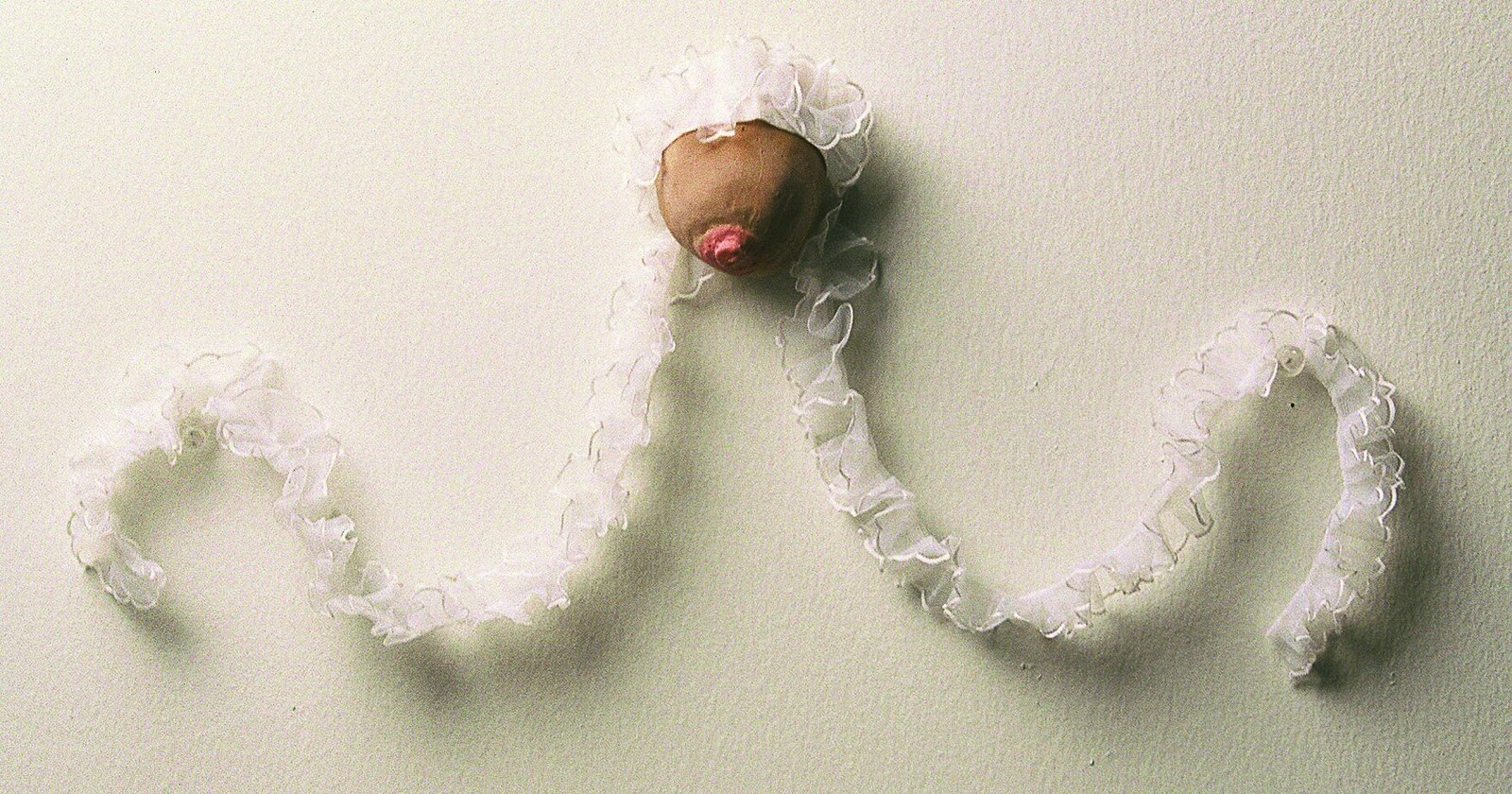
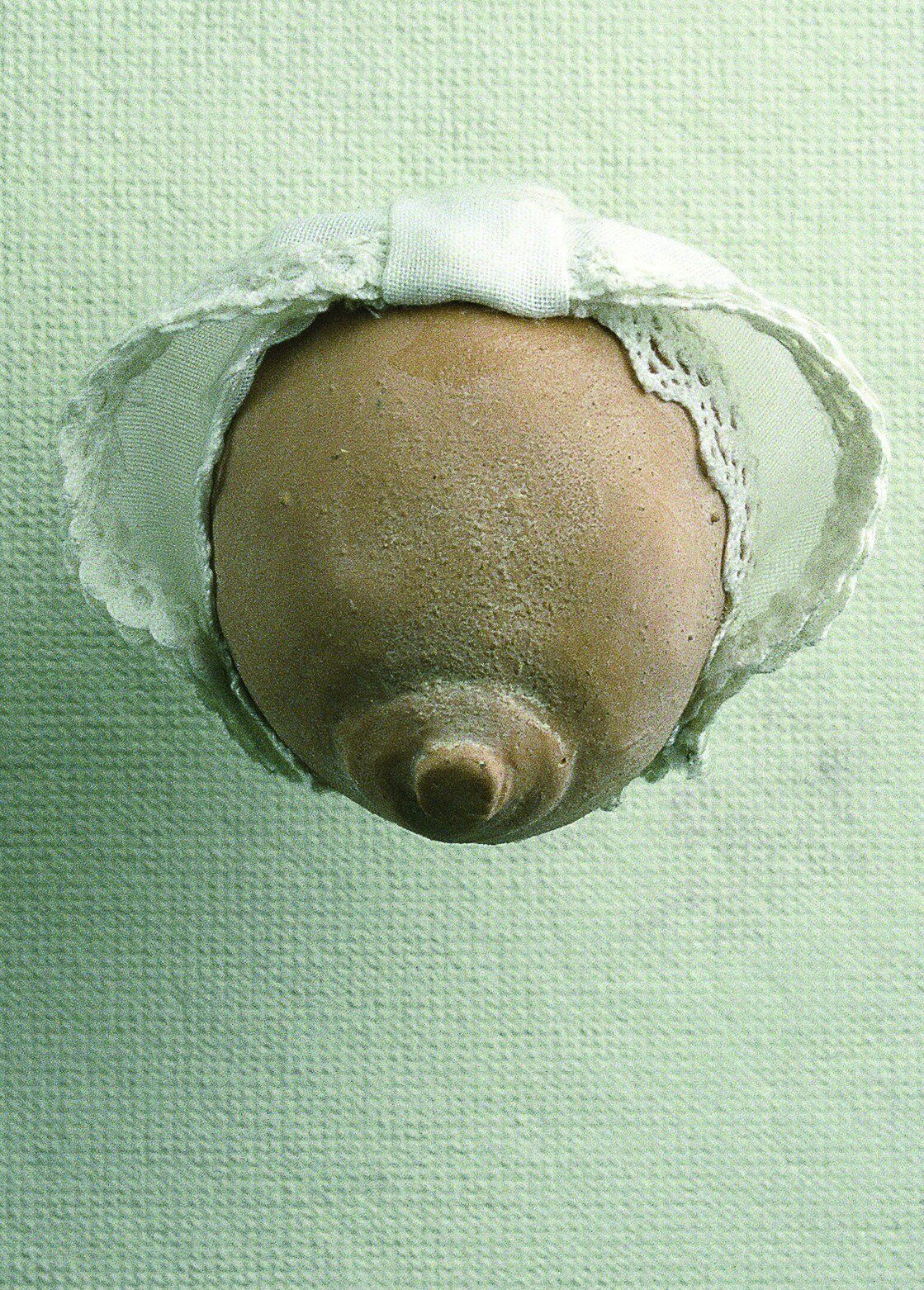
“As an artist, though,” she told me over the phone, “you get an idea from somewhere and it possesses you for a while, so you pursue it.” Once Zucker began looking for wet nurses, they were everywhere, “heroines hiding in plain sight”—in a horse-drawn carriage painted by Degas, for instance, or in a medieval prison, breastfeeding a sickly, shackled old man awaiting execution (in Roman Charity by Rubens). In typical French form, France said its breast milk was superior. The Morvan region in Burgundy was said to produce the most elegant wet nurses with the best milk—a veritable brie of breasts. Wet nurses in Europe were, on one hand, usually poor women whose ability to feed the precious kin of others gave them a kind of power, independence, rich-adjacency, a way to earn money for their own families. On the other hand, they were status objects for rich families, “sourced” from all over Europe and often costumed in the ethnic garb of their home country, bonnets adorned with elaborate telltale ribbons.
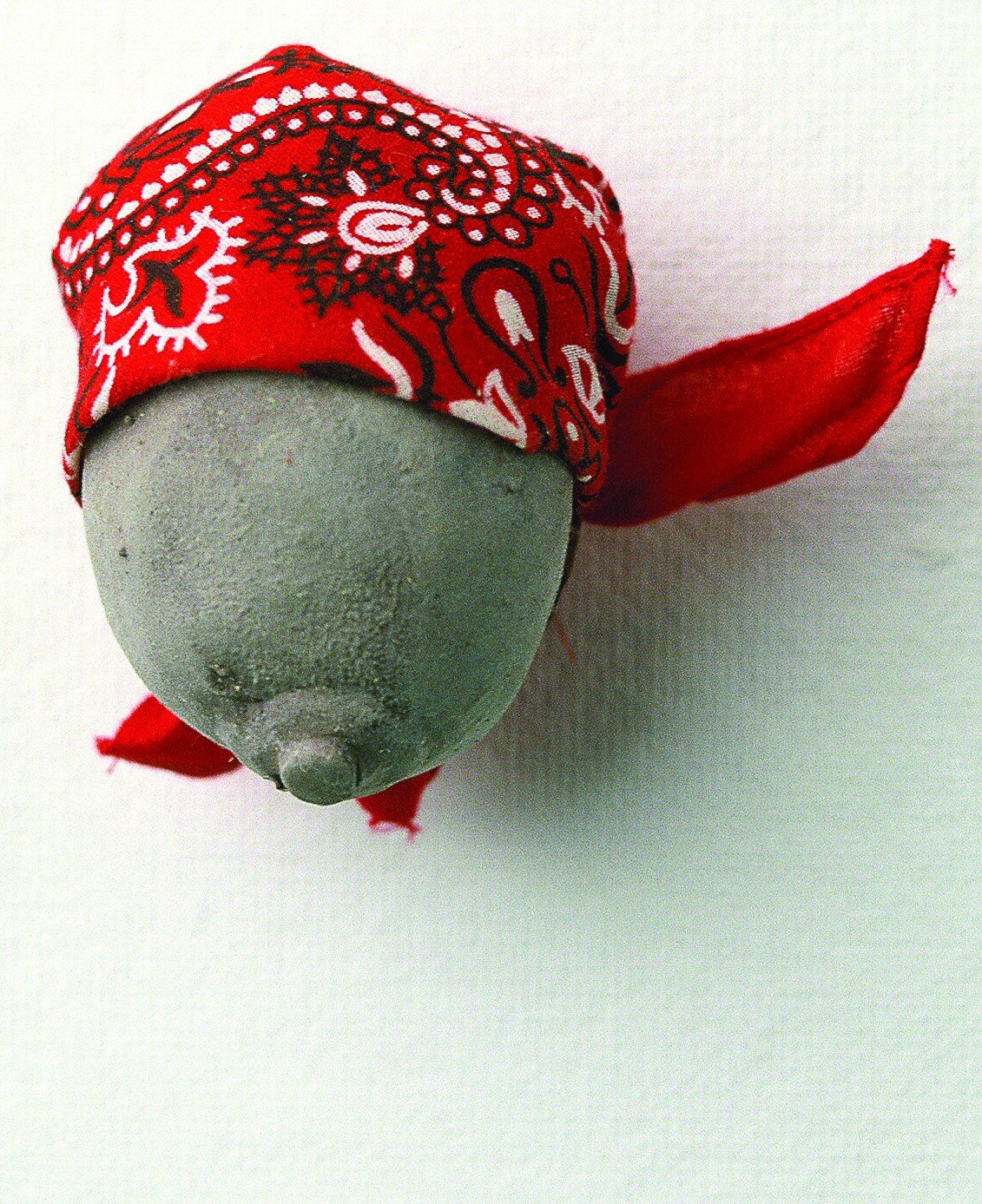
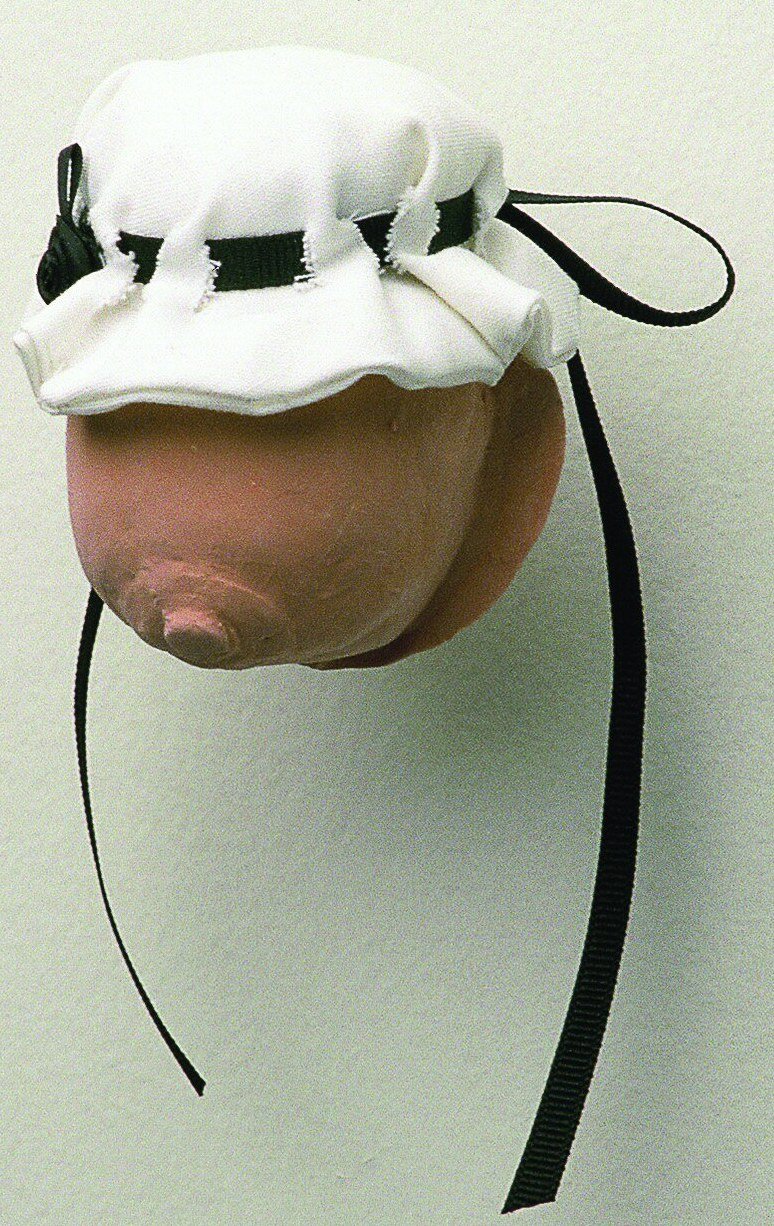
To Zucker, these women were not trophy wives, exactly, but something close. She began making work that paid homage to this marriage of life-giving power and sexist objectification. “I hadn’t drawn much like this,” she said, but she found herself sketching scenes from her research. She drew breast-milk tests and a “sucking wall”—literally a wall of breasts to suck. Then came sculptures of the trophy breasts, adorned with hats and ribbons. “I’d make a clay original, then a plaster mold, cast each one of those in latex, and then I sewed their little hats,” she told me. “And I don’t even know how to sew.” German nurses, French, early American, enslaved—she cast breasts until “I reached a point where I had to stop.”
As Nochlin noted of the Impressionists, who depicted men having fun, perhaps at a boîte being served by a saucy barmaid, can-can dancers kicking in the background, “men’s leisure is produced and maintained by women’s work, disguised to look like pleasure.” By ignoring the beribboned wet nurse, “history has silenced hundreds of thousands, if not millions, of women who saved countless lives” by personally creating and supplying nourishment to babies (who were also personally created by women). Such productivity—such necessary, powerful work—tucked brusquely into the background of the picture. And in the foreground, the man-made male “Creator,” gesturing vaguely over his shoulder at the busy women, as if to say, “Sure, they’re great. Really great girls. But you know who thought up women in the first place? This guy.”
A note on the issue
Smith, one of the five surviving Seven Sisters, has a unique relationship to feminism. It’s the synecdoche of a genteel, pearls-and-gloves, First-Lady finishing school, of course, and it has turned out an enormous number of world-changing feminists—not just Betty Friedan and Gloria Steinem but also Thelma Golden, Catharine A. MacKinnon, Madeleine L’Engle, Lucy Lippard, the list goes on. During the school year, I teach at Smith, which brings me to my very productive summer, where I spent almost every workday with between one and four Smith students.
This summer, Annabelle, Hailey, and Sophia were in New York to fulfill their praxis internships in fields like journalism, archives, publishing, and SWG (i.e., women’s studies). We worked around my dining room table on my summer projects, which included producing the off-Broadway run of The Body of Mary, shipping books from Dottir Press, finalizing the manuscript for Feminist Press, and creating this very Smith-y issue of LIBER.
By summer’s close, Annabelle Sharp created multiple original illustrations for LIBER and The Body of Mary. Hailey Krueger, tasked with helping me assign and edit the reviews, also interviewed our octogenarian cover artist for this issue. Sophia Jerome combed through the manuscript I’m editing—correspondence between Betty Fradkin and Bessie Head that has been languishing for years—and got me back on track. Meanwhile, Class of ’26 Alice Bae, BA in statistics and data science, collected data about the gender disparity in New York City theater creative teams before dashing off to start her graduate work at the London School of Economics. The Seven Sisters may be going the way of the dodo bird, but these four sisters are keeping the feminist flame lit.