My first day ever in New York, age sixteen, I got stuck in the middle of Central Park in the pouring rain with no umbrella and zero sense of direction. Drenched, cold, and hopelessly wandering from the Alice in Wonderland statue to the steps of the Met, I was in remarkably high spirits. I had read Just Kids earlier that summer and regarded this trip as a rite of passage in my Patti Smith pilgrimage. The city was not a stranger to me: there was Washington Square Park, where Patti had slept during her first few weeks, she and Robert Mapplethorpe surviving on lettuce sandwiches. Sure, each face I passed on Fifth Avenue was unfamiliar, but I could imagine Patti and just know I belonged. Even the comically overpriced T-shirts at the John Varvatos store on the Bowery shimmered with Patti and CBGB-era spirit.
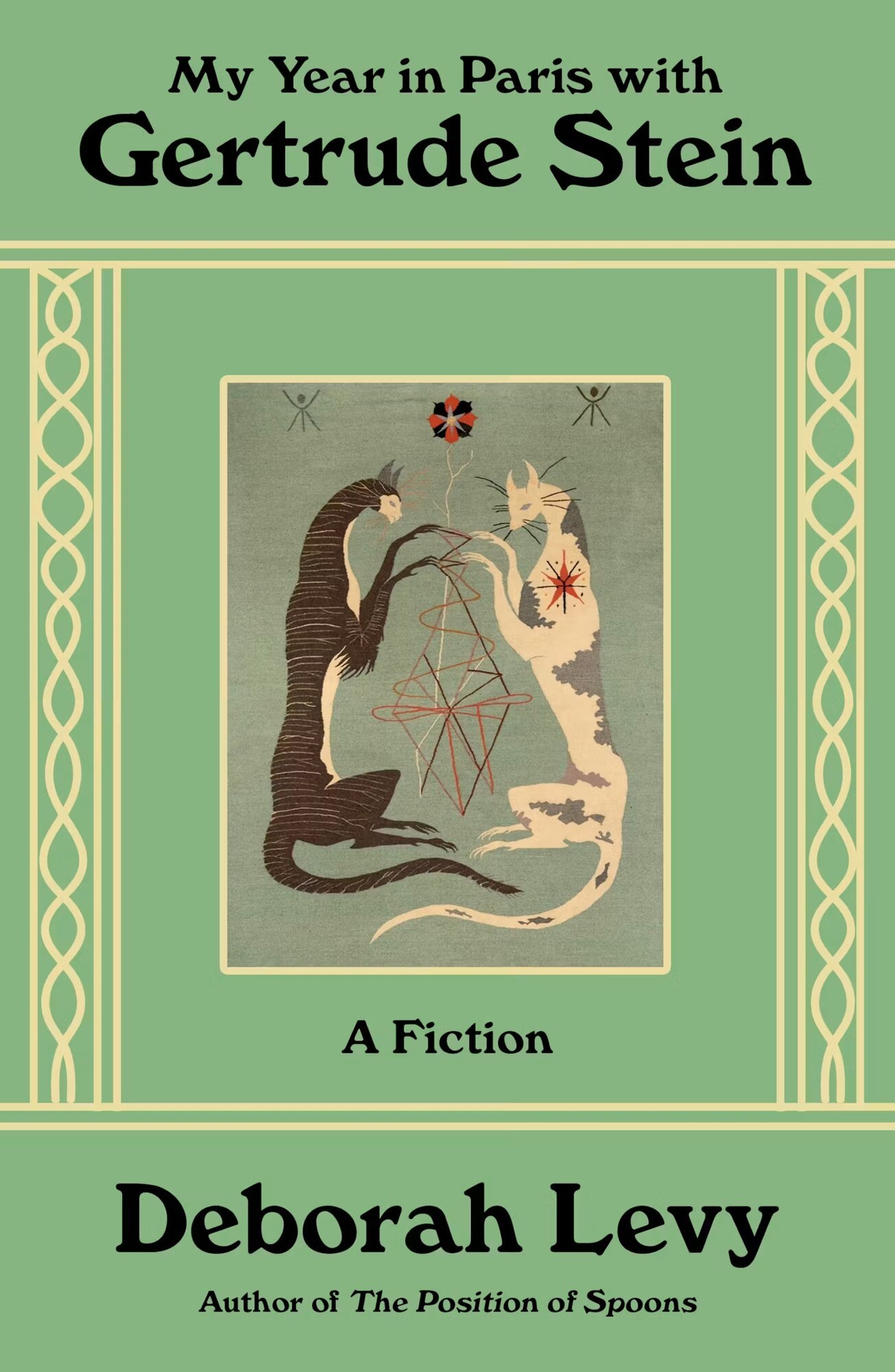
Patti wasn’t my first author/guide. I’d opted for books over a social life throughout much of high school and had long approached new destinations through the eyes of a beloved author. When I began at Smith College, I knew from Sylvia Plath’s journals to write in my own on the porch of Haven/Wesley. I assumed this author-as-friend-guide was my own (mal)adaptive quirk. That is, until I read Deborah Levy’s My Year in Paris with Gertrude Stein.
Though subtitled A Fiction, this book is no novel, or at least not in any recognizable sense to me. Instead, it is a marriage of the narrator’s messy inner thoughts and a love letter to Paris and its inhabitants. At the story’s heart is expat-in-Paris Gertrude Stein, the titanic persona and confusing writer of Tender Buttons, The Making of Americans, and The Autobiography of Alice B. Toklas, which is not an autobiography at all but rather Stein writing about herself as a genius from the perspective of her wife. But calling Stein a writer is like calling Patti Smith a singer—it doesn’t capture how their whole lives were art projects—and the narrator of My Year is more interested in Gertrude Stein: Remarkable Human than the mere scrivener. The book’s plot, as it were, is that Levy is in Paris for a year to write an essay about Stein, a quest that begins to feel like a curse as she struggles to understand the essence of this mind-bogglingly unique, long-dead twentieth-century woman. Levy writes:
I wanted my essay to be a clear stream, but there was so much going on. A lost cat, Eva’s missing husband, the vast menu of Fanny’s erotic conquests, finding my way around Paris, the temptation to put down Stein’s writing and read Georges Simenon instead. The streams were flowing through the nineteenth century into the twenty-first and all over the place. Were they streams of consciousness? For some reason I felt the need to defend Gertrude Stein. Every century needs an artist to dismantle coherence as we have been taught it and make a space for something new to happen.”
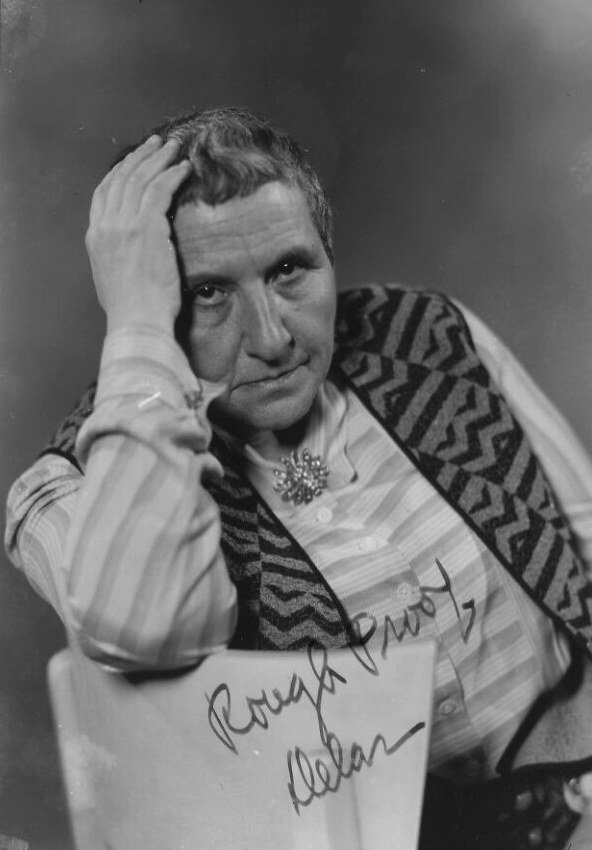
Our narrator finds the task of writing about Stein to be all-consuming. She wanders the streets of Paris from the Boulevard Raspail (where Stein witnessed the beginning of World War I with Picasso) to the Père Lachaise cemetery (Stein is buried there). When she is with her two Paris friends, Fanny and Eva, she speaks as if Gertrude and Alice are mutual friends of hers. And in Levy’s own work, Stein’s uncanny style whispers to her everywhere. “Writing was Stein’s way of avoiding everything. It seems to me that repetition was her way of moving closer to her enquiry but never getting there,” she writes before repeating again that Eva has blue eyes “that make people go Aww.” Even Eva’s missing cat is a manifestation of Steinian experimentation with words and meaning. Initially named It, Fanny renames the cat Bob to reduce confusion. It is the most general of nouns, the meaning flexible and dependent on the situation; once a singular identity is attached to it, nothing makes sense. A generic word once tossed around without thought suddenly requires our attention. As Stein said, clear as mud. But mud is precious to Stein, whom Levy tells us “was ashamed of her bestselling autobiography because it was so understandable,” and that “she longed for readers to find her, yet there was a part of her that could not bear to be found.”
To Stein, and therefore to Levy, the purpose of art is not to be understood but to be considered. Her writing encourages the reader to sit with the confusion, to resist an answer. My Year in Paris (evidently the essay the narrator spent the entire book struggling to write) comes to fruition when Levy stops trying to pin down Stein as if she is a butterfly specimen and instead allows herself to be swept up.
Throughout the book, Levy refers to Gertrude as Ms. Stein, Gertrude Stein, Stein, and just Gertrude. The correct address is not obvious. Levy has never met Stein but feels she knows her intimately through writing, in a way that seems to pierce time. (I feel a similar way when I write about Patti Smith; referring to her as Smith sounds both too formal, too much like I’m writing a book report, and too generic. But calling her Patti feels presumptuous, even though she spiritually led me through New York City.) Only our intimates can really push our buttons, so when Levy says, “Frankly, my life is being ruined by Gertrude. Is it respectful to refer to her as Gertrude?” she concludes it must be. Besides, “Picasso called Gertrude Stein by her first name.” Levy opts for the familiar address, as did I, and what other option is there, really, when one encounters a thinker so kindred, yet so out of reach?
As Levy circles the spiral-shaped arrondissements of Paris, she learns how to approach her subject: to write about Gertrude Stein is to write around her, like how Perseus fought Medusa by looking in the reflection of his shield to avoid being turned into stone. Look straight at Stein and you may be paralyzed by her sheer nonconformity: words, grammar, and conventions of literary analysis that have been commonplace since grade school are not only unhelpful now, but missing the point. To Stein, that comma I just used is just slowing your growth (as a reader, writer, artist, or person) because “helping you along holding your coat for you and putting on your shoes keeps you from living your life as actively as you should lead it.” Having been in school for the majority of my life (I’m nineteen), a missed comma means a grade deduction, not a daring rebuke of convention. Certainly not a treatise on living life with intention. But from Levy’s encounter, I am beginning to see that to read, understand, and appreciate this wholly unique figure, one must defy the stubbornness of habit and approach her work as if learning language anew.