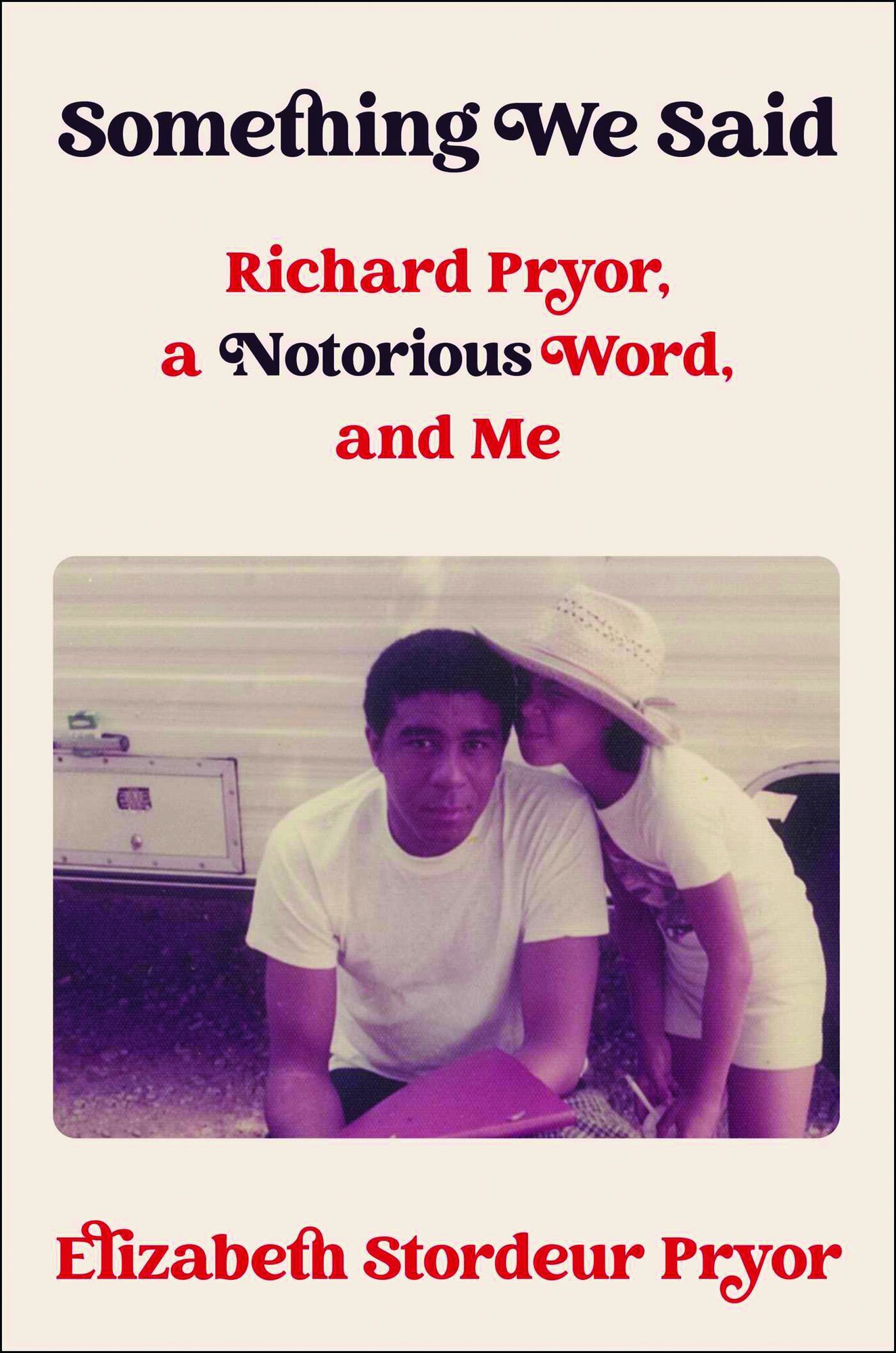
The back cover of Elizabeth Pryor’s new book labels the work biography/autobiography. More accurately, it is an amalgam of coming-of-age memoir, celebrity bio, African American history, and a scholarly treatise on the fraught, explosive evolution of “the N-word.” Her interest—let’s say obsession—with the word, though, is not merely academic.
A professor of history at Smith College, Pryor was winding up a lecture about the 1850 Fugitive Slave Act, in which she was noting the prevalence of anti-Chinese prejudice in California, even among Blacks, when one of her favorite students raised her hand to ask if she’d ever seen Blazing Saddles. Until that moment, Elizabeth had been sure her students didn’t know that Richard Pryor, who wrote the satirical movie, was her father, but now she felt put on the spot. Yes, she had seen the movie, she retorted, although in truth she had not. She was well aware of the language used in it—words she considered offensive, especially the N-word, which her father deployed to subversive effect in his performances and writings.
She wanted to wrap up her presentation quickly, but the student raised her hand again, this time blurting out a famous line from that movie that actually was pertinent to the class topic: “We’ll take the ch*nks and the n***ers, but we don’t want the Irish.” The N-word had never been uttered in her classroom, and Elizabeth froze. “It’s a joke,” the student reassured her, but Elizabeth knew very well that saying the N-word was no joke. The class ended, and she walked back to her office, stunned. She had missed what academics call a teachable moment, for sure, but more than stumbling in class, she felt overwhelmed. That word, she admits, “was so deeply entangled in every aspect of my life, and there was so much I didn’t understand.” Now she felt impelled to exhume the history of the word and the indelible connection it had to her life, her relationship with her parents (especially her father), and her sense of identity as a biracial woman.
Elizabeth traces the word’s history in twelve chapters she calls “interludes,” beginning with the kidnapping of Africans in Angola and their arrival in Virginia, where they became known as “n*gars”, a term that at first meant black but soon became a derogatory slur meaning slave. She examines the connection of the N-word to Jim Crow, Frederick Douglass, Abraham Lincoln, Booker T. Washington, and Theodore Roosevelt; to antebellum white supremacists, writers and artists of the Harlem Renaissance, Gone with the Wind, Black Power, hip-hop, rap, O.J. Simpson, and the NAACP. Parsing the difference between Blacks using the N-word as a “subversive weapon,” a way “to build solidarity,” and whites using the word as damnation, she concludes that the N-word “was never one thing—it could be poison or antidote depending on who controlled the mic.” Her discovery led her to publish her first research paper, a new take on a controversial word and, even more, proof to herself that although she was “biracial and Jewish and raised in white neighborhoods,” she was “an authentic-enough Black person to take on the word ‘n***er.’ ” She was investigating language, she writes, “to claim my Pryorness.”
In fact, claiming her Pryorness is at the heart of this book. She introduces each interlude with a quote from her father’s stand-up, underscoring the anger that fueled his fiery language and, just as crucially, shaped her emotionally fraught relationship with him. Before claiming her Pryorness, she first had to define it, a process that informed her young life. The only child of Pryor and Maxine Silverman, Elizabeth, born in Los Angeles when her parents lived together, left with her mother when she was an infant and was raised in Boston among her white, Jewish relatives. She first met her father in 1974 when Pryor, touring in New Jersey, sent for Maxine and six-year-old Elizabeth to see him perform. It was time, apparently, for him to meet his daughter.
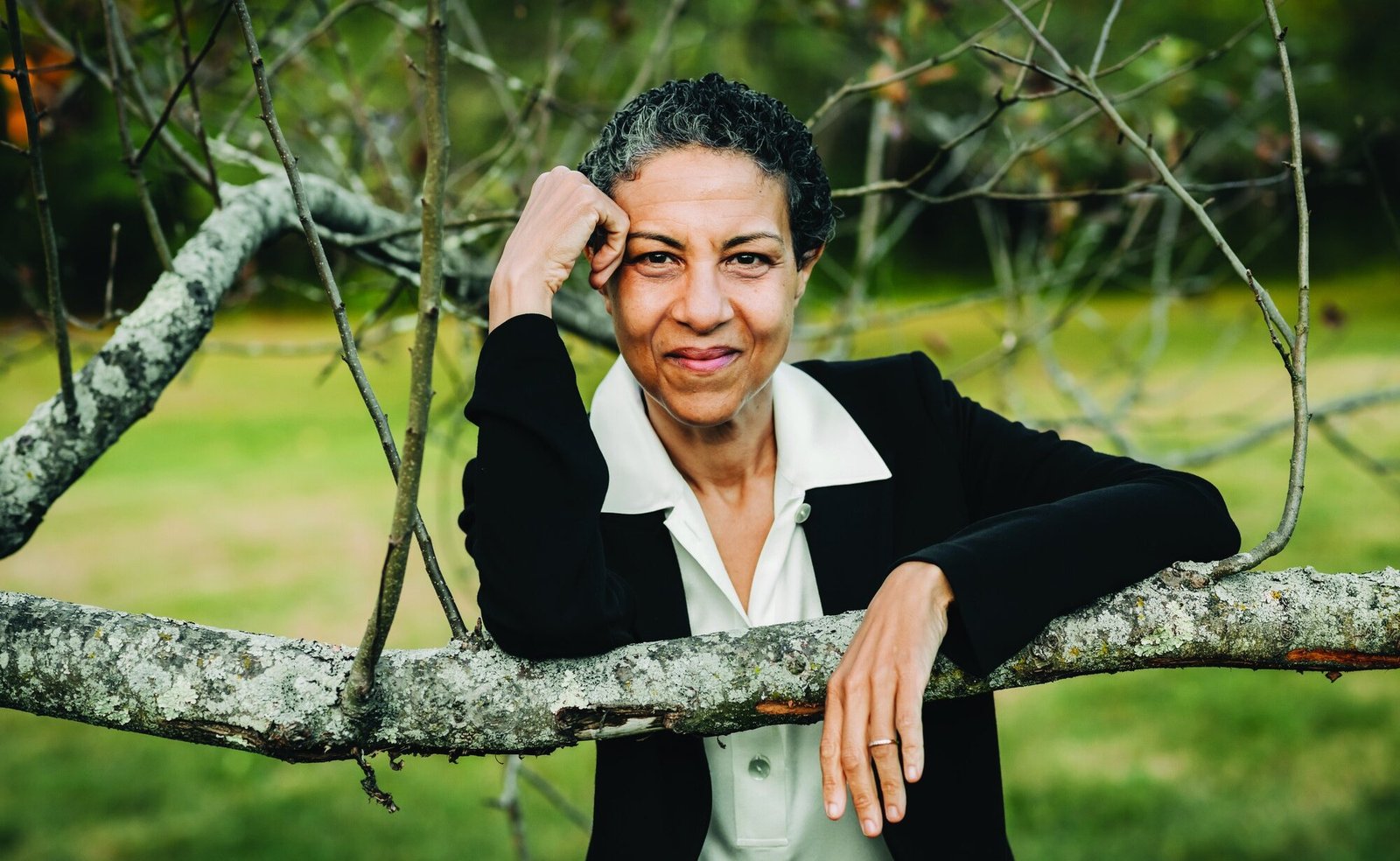
By the time of that first meeting, Pryor had won a Grammy for Best Comedy Album, cowritten Blazing Saddles, and was a Hollywood star. To Elizabeth, he shone as mythical, alluring, larger than life. The man she saw when he opened his hotel room door fit her expectations: handsome and in his thirties, he stood there naked except for a towel around his waist. When his eyes twinkled, her heart soared. When he let her watch him shave, she stared at him rapturously. “Was the warm feeling in my chest what everyone felt when they got to spend time with their father?” she asked herself. She and Maxine watched his show, which she found “titillating and naughty.” As part of his skit, he turned his back to the audience and pretended to pee, and she felt an urge “to peek around the velvet curtains and tell everyone this guy belonged to me.” It sounds a bit creepy, but she was a naïve little girl with a world-famous star for a dad; she was “madly in love,” she writes, and the abiding theme of her life and memoir is her longing for him to love her back.
She and her mother moved to LA shortly after that first meeting, giving Elizabeth more contact with her father. They spent a few days a week at his house so Maxine could help type a film script. “Seeing him was always a special occasion,” Elizabeth recalls. “Getting all of his attention made me feel like a movie star.” He was so handsome “in his tight blue jeans” and “smelled delicious and sweet.” Sometimes he’d take her out to dinner, an occasion that she dressed up for, and every few weeks she slept over at his house. She met his extended family, including his overbearing grandmother, whom everyone called Mama, and his three other children (he went on to have seven in all) with as many women. She vied for his attention with girlfriends, wives, and women she later realized were prostitutes. She saw him high on drugs and in a stupor from alcohol. He trashed the house. He spanked her many times, even with a belt, “and each time,” she recalls, “I tried so hard to be a good girl for him.” And she defended him when her mother insisted that she was delusional if she thought he really cared about her. Elizabeth desperately needed him to care, and one way he showed he did was by teaching her to never let anyone call her an N-word.
She was in college when Pryor sent her an audiocassette of one of his albums and a videocassette of a documentary about Malcolm X. Elizabeth saw the gifts as his invitation “into a secret Black world, the one where Black people get real with each other and build a coalition for change.” Embracing Blackness wholeheartedly meant, for her, breaking up with her white boyfriend, cutting off her white best friend, and cutting her mother out of her life, unable to forgive her “for not preparing me for life as a Black girl growing up in a white world” (and for a terrible fight in which Maxine called her teenage daughter that most indefensible slur). Bolstered by a Black activist community in college, she moved to transform herself into the Black daughter she believed her father would love.
After college, she admits that she saw these efforts as simplistic and changed course, breaking up with a misogynist Black boyfriend and reconciling with her mother and best friend. A circuitous path brought her to graduate studies in history and a career as an academic. In her much-lauded TED talk, she describes her success in the classroom in helping students to understand the N-word as a capsule of accumulated hurt from the trauma of racism. She never mentions her father.
As a comedian, Richard Pryor was slick and assured with faultless timing. Audiences roared at his brash, unfettered persona, but I admit I wasn’t among them, never able to laugh at his expletives about Blacks and women. I had heard the B-word more often than the N-word; both seemed aflame with a rage that frightened me. Elizabeth’s memoir—candid, raw—charts her long struggle to confront that rage, to understand her father and his demons, to tease out the complexities of Black masculinity, and to forge her own identity. She is a wife, mother, and acclaimed scholar, but it’s clear from the memoir that she is a haunted woman. The N-word is powerful, but not as powerful as a father’s ghost.